Photo courtesy of Ashley Johnson
“I think ‘spooky’ is one of the most overused labels in the horse industry,” says Chelsey O’Brien, a trainer based in Northern Virginia specializing in Thoroughbreds from birth through their second careers and a regular participant in the Thoroughbred Makeover, earning Reserve Champion in barrel racing in 2024. “It’s usually a symptom, not the diagnosis.”
Deserved or not, Thoroughbreds often have a reputation for being spooky. But what’s the truth behind that idea? How does an owner or rider understand and manage spookiness?
Why Are Thoroughbreds Called Spooky?
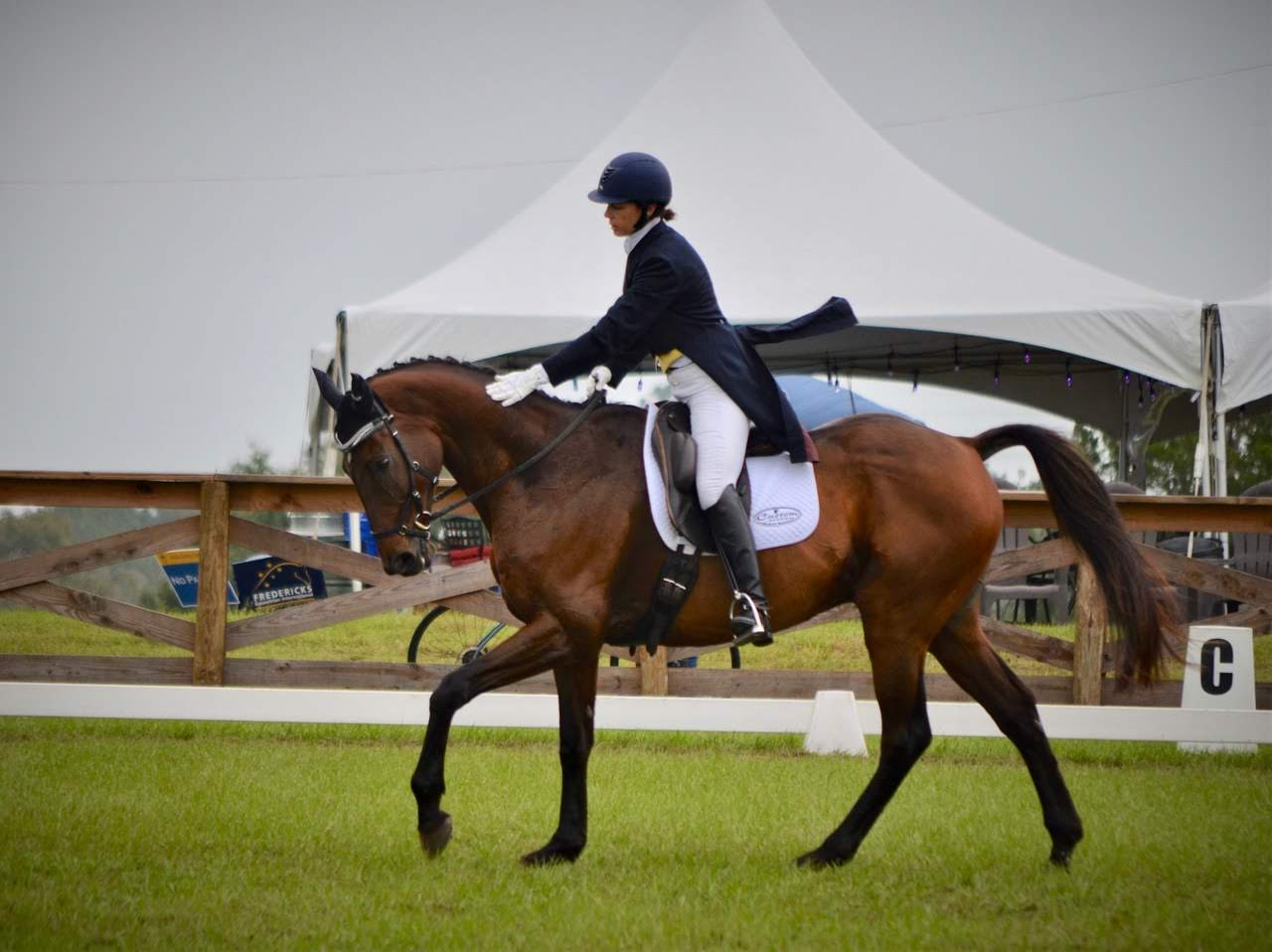
Generally speaking, Thoroughbreds are a sensitive breed. “Because they are bred to gallop, they often resort to movement, such as spooking or bolting, to solve problems when they are unsure,” says Ashley Johnson, a 5* international event rider and U.S. Eventing Association Level-5 certified coach who operates Ashland Equestrian, based in Ocala, Florida.
O’Brien also explains that young Thoroughbreds learn to go onto a track and run fast. On the plus side, these horses have often been exposed to a lot of things.
“Many hack long distances from the barn to the track,” she says. “They walk through tunnels, around heavy equipment and machinery, alongside tractors, golf carts, outriders and dozens of other horses. They’re groomed, bathed, hand-walked, ponied, galloped and cared for every single day. They live in a busy, structured environment and are exposed to far more than they’re often given credit for.”
On the other hand, Johnson explains, many have not been taught several skills common for sport horses, such as being on the aids, being ridden alone or being ridden in the open over terrain. “Retired racehorses are truly switching careers, so owners and trainers need to be sensitive to the new skills they need to develop in their awareness and confidence as well as the new technical skills that they will be taught,” she says. “Most Thoroughbreds are incredibly willing and game, but they need to trust the leadership around them.”
The Difference Between Spooky and Sensitive
Johnson reframes spookiness as awareness. As prey animals this awareness has helped horses survive for thousands of years. “They are operating on their own natural instinct and doing what instinctively will keep them safe,” she says.
What does a truly anxious horse look like? Johnson says they will have an expression of alarm or worry in their eye. “Sometimes their eyes will enlarge, and you will be able to see the whites of their eyes,” she explains. “Sometimes they will puff or snort and try to spin away from an object of concern.” In contrast, confident horses don’t exhibit these signs. They might move away from something that concerns them, but they trust their rider and quickly refocus on the work at hand, she says.
At times it can be easy for owners to misinterpret hypervigilance, shying away from objects, scooting the hind end (quickly swinging his hindquarters sideways or underneath himself), jumping at every little thing, overreacting or being tense as simply being spooky. “Of course horses spook—every horse does from time to time—but when those behaviors become consistent, I start asking why,” says O’Brien.
Both trainers take a whole-horse approach to better understand the individual. “In my experience, horses who consistently act spooky are less comfortable somewhere,” says Johnson.
They evaluate the horse’s diet, have a veterinarian diagnose and treat any physically painful issues including ulcers, work with a farrier to improve the horse’s feet when necessary and add therapeutic modalities as needed. “Only after I’ve addressed the horse’s physical and mental well-being do I focus on exposure and training,” says O’Brien. “That’s where patient, fair and confident handling builds trust.”
When is a Thoroughbred Confused vs. Overwhelmed?
O’Brien says she believes confusion and overwhelm often overlap. “When a horse doesn’t understand, he’ll usually keep searching for the right answer,” she explains. “Unfortunately, riders sometimes mistake that searching for disobedience and interrupt the learning process before the horse has a chance to figure it out.”
In contrast, she says a mentally overwhelmed horse stops thinking. Instead of looking for an answer, he reacts with a fight, flight or freeze response.
“I also think a horse that feels physically good is much more likely to stay mentally available,” she adds. “If they don’t know where their feet are because they’re weak or unbalanced, if they’re uncomfortable or if they’ve never been exposed to new environments, they’re far more likely to become overwhelmed.”
O’Brien says she believes Thoroughbreds need a confident person to work with them. “They don’t need someone tiptoeing around them or trying to control every movement,” she explains. “They need someone who gives them confidence to work through uncertainty.
“My goal isn’t to micromanage every decision the horse makes,” she continues. “It’s to teach the horse how to think. When they start searching for the right answer on their own (such as independently taking a step towards water without being asked) and get rewarded for making good decisions, you create a horse that’s confident instead of simply obedient.”
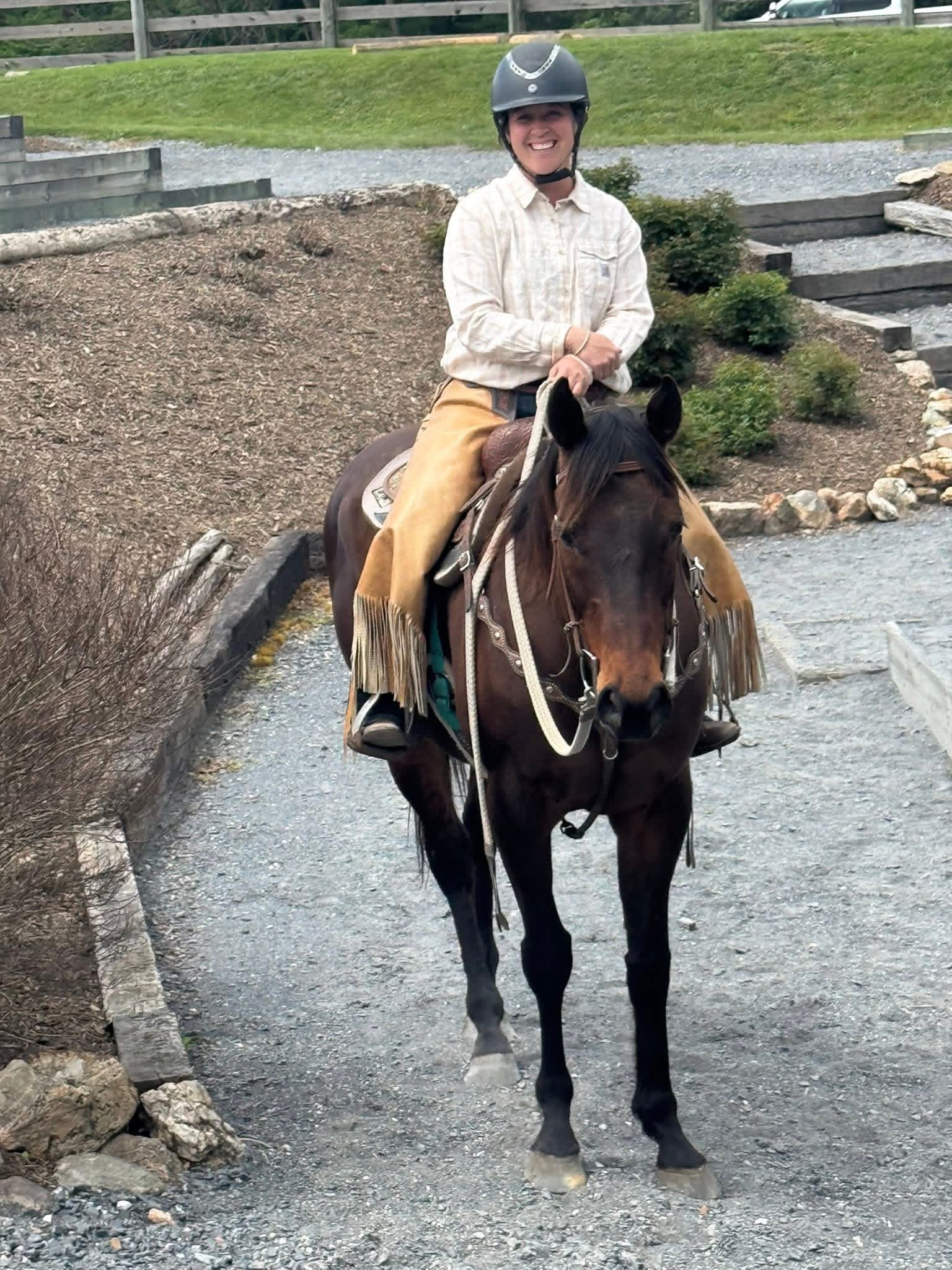
“Horses don’t wake up in the morning trying to make our lives difficult,” says trainer Chelsey O’Brien. “Our job is to listen before we correct.” Photo courtesy of Chelsey O’Brien
Physical Problems Misinterpreted as Behavior Problems
Physical issues masquerading as training problems happen frequently in many horses, including Thoroughbreds. O’Brien says pain doesn’t always look like limping. Sometimes it appears as resistance, anxiety or inconsistency. “The list (of possible physical ailments) is extensive, which is why having a knowledgeable trainer working alongside a veterinarian is so important,” she says.
Horses express discomfort in many ways. Among others, O’Brien listed reduced performance, hypervigilance, spooking, becoming herd-bound, resisting collection, refusing to go forward, ear pinning, bucking, bolting, difficulty bending or flexing, tripping, swapping leads or simply becoming inconsistent. “Before I label a horse as stubborn, lazy or naughty, I ask myself what they’re trying to communicate,” she says. “Horses don’t wake up in the morning trying to make our lives difficult. Our job is to listen before we correct.”
Steps in a Thoroughbred’s Education
With Thoroughbreds retired from the racetrack, people often get an adult horse, but developmentally they are still very green. Johnson says to be careful not to mix up a horse’s willingness to please with actual confidence. Sometimes Thoroughbreds try very hard to please, but then they hit a wall because they lack a solid foundation of basic training skills.
Johnson says horses operate on their own system of knowledge and instinct. “It is through the training process that, ideally, horses and humans come together and operate on the same page,” she explains. “That training takes time, and it takes establishing building blocks of trust and understanding. Ultimately, in a good relationship, humans create intention, and horses are able to problem solve and meet that intention.”
Similarly, O’Brien notes owners need to be present, engaged and curious with their horses. Additionally, they should know their horses’ tendencies, how they process new situations and what’s normal behavior for them during training. “The easy answer is to say, ‘Oh, he’s just like that.’ I don’t believe that’s good enough,” she says.
Final Thoughts
In the end people have a responsibility to become good stewards of the horse, O’Brien says.
Both trainers say they support the idea of building a good team, including a veterinarian, a quality farrier and a knowledgeable trainer. “If you don’t have access to those resources, don’t rely solely on the nearest Facebook horse group,” O’Brien says. “Find a mentor. Read books. Invest in your education. Follow a well-rounded program. Never stop learning.
“I always try to look at the whole picture because every one of us plays a role in the horse’s success,” she says. “Horses are incredibly honest. They reflect our timing, our confidence, our consistency and our leadership. They truly are the greatest mirror.
“With patience, consistency, good horsemanship and a whole-horse approach, these horses thrive,” she adds. “That’s why I love Thoroughbreds so much. They ask us to become better horsemen and, when we do, they’ll give us absolutely everything they have.”