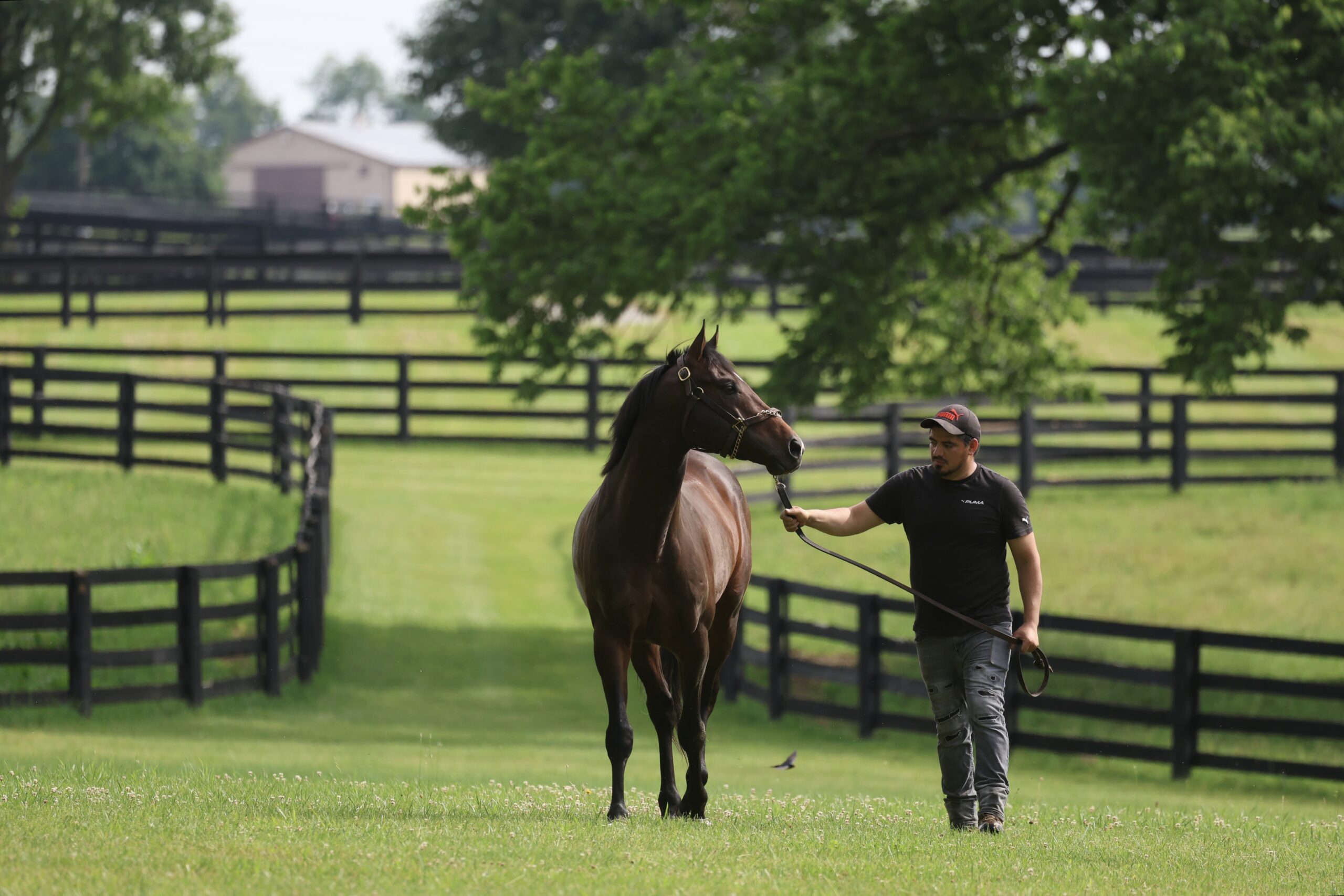
Horses without access to pasture might need added vitamin E to support muscle, nerve and immune health. Photo Credit: Holland Smith / Owney Creative
Vitamin E acts as a powerful antioxidant, helping protect muscle cells and other tissues from free-radical damage. Understanding this role can help Thoroughbred owners recognize when their horses might need supplementation.
Basics of Vitamin E in Horses
Horses absorb the fat-soluble vitamin E along with dietary fats and store it in fatty tissue and the liver. Because horses do not synthesize vitamin E, they must obtain it through their diet. Vitamin E performs many functions, but its primary role involves antioxidant activity, which helps maintain normal neuromuscular function, explains Laurie Lawrence, PhD, professor of equine nutrition within the Department of Animal and Food Sciences at the University of Kentucky, in Lexington.
Dietary vitamin E occurs in eight forms: four tocopherols (alpha-, beta-, gamma- and delta-) and four tocotrienols (alpha-, beta-, gamma- and delta-). Of the tocopherols, horses absorb and use alpha-tocopherol (α-tocopherol) most readily, and researchers have studied it most extensively. Feed and supplement manufacturers most often list this form of vitamin E. Researchers know less about tocotrienols, although these compounds might also function as important antioxidants. Because horses use alpha-tocopherol more efficiently, we’ll focus on it in this article.
The Role of Antioxidants in the Horse
Antioxidants serve as the horse’s major defense system against free-radical damage.
A bit of chemistry helps explain why antioxidants matter. Normal cellular metabolism produces unstable molecules called free radicals. Illness, injury and other stressors can increase their production. When free radicals overwhelm the body’s antioxidant defenses, the resulting oxidative stress can damage cell membranes, proteins, fats (lipids) and DNA and disrupt cellular function. Horses combat this using antioxidants.
Vitamin E protects cell membranes by neutralizing free radicals, while vitamin C helps restore vitamin E after this reaction. Selenium also supports the horse’s antioxidant defenses. Because vitamin E and selenium deficiencies can cause similar clinical signs, distinguishing between them can prove difficult, Lawrence says.
For decades researchers have recognized vitamin E and/or selenium deficiencies as a cause of nutritional myodegeneration (commonly known as white muscle disease), says Lawrence. This disease primarily affects foals born to mares consuming diets low in vitamin E and/or selenium, with signs that include muscle weakness, inability to stand and difficulty nursing. Foals treated early with supplemental vitamin E and supportive therapies including fluids, electrolytes, and antibiotics to treat secondary pneumonia have a good prognosis.
Most adult horses with vitamin E deficiencies do not show any clinical signs of neuromuscular disease. But in recent years, researchers have associated vitamin E deficiency with nerve degeneration in horses leading to ataxia, loss of coordination and muscle atrophy. Vitamin E responsive myopathy (VEM) or equine motor neuron disease (EMND) are examples of such problems.
“Some, but not all, vitamin E disorders may be responsive to vitamin E supplementation,” says Lawrence. If serum alpha-tocopherol concentrations remain low despite adequate vitamin E supplementation, consider whether gastrointestinal inflammation could be impairing absorption. In addition, Vitamin E deficiency might go undiagnosed in horses with certain reproductive problems or impaired immunity.
Natural Vitamin E for Horses
“The good news is that fresh pasture is high in vitamin E,” Lawrence says. Horses consuming pasture equal to approximately 1.7% of their body weight can receive 350 to 3,000 international units (IU) daily. “So grazing horses typically have relatively high vitamin E status.”
Veterinarians assess horses’ vitamin E status—or, more specifically, alpha-tocopherol concentration—using serum or plasma samples. Not all veterinary or diagnostic laboratories offer vitamin E testing, Lawrence adds, but those that do provide reference ranges. The University of California, Davis, Weill School of Veterinary Medicine uses 2 micrograms/milliliter (µg/mL) as the cutoff between adequate and deficient concentrations.
Horses with continual access to fresh green grass can build vitamin E reserves in the liver and fatty tissue that last two to four months after fresh forage becomes unavailable. Horses without regular pasture access or those maintained on hay, such as Thoroughbreds stabled at the racetrack, can exhaust their vitamin E stores. “Once the forage plants are cut and dried to make hay, the vitamin E content rapidly decreases,” says Lawrence. “Many of the ingredients included in concentrate mixes are also low in vitamin E. To ensure adequate vitamin E intakes, most commercial feeds include supplemental vitamin E.”
National Research Council recommendations (NRC, 2007) specify 1-2 IU of vitamin E per kilogram of body weight daily, with a safe upper dietary limit of 20 IU/kg body weight. Thus, a 500-kg horse needs a minimum of 500 to 1,000 IU/day of vitamin E. The minimum requirement ensures meeting basic bodily functions. However, horses in training, recovering from training or under stress might benefit from higher vitamin E levels.
To determine how much vitamin E your horse receives, check the feed tag and calculate the amount based on what your horse consumes each day. Feed tags typically list vitamin E in IU per pound or kilogram. The ingredient name indicates whether the product contains natural or synthetic vitamin E.
Natural vitamin E breaks down quickly during storage, so feed manufacturers often use a more stable form. On feed tags, d-alpha indicates natural vitamin E, while dl-alpha indicates synthetic vitamin E. The word acetate identifies the stabilized form. Horses absorb both natural and synthetic vitamin E, but they use the natural form more efficiently. Some liquid supplements contain free, natural vitamin E in a water-dispersible form that horses absorb readily. Because it contains no acetate, this form also skips an extra digestive step.
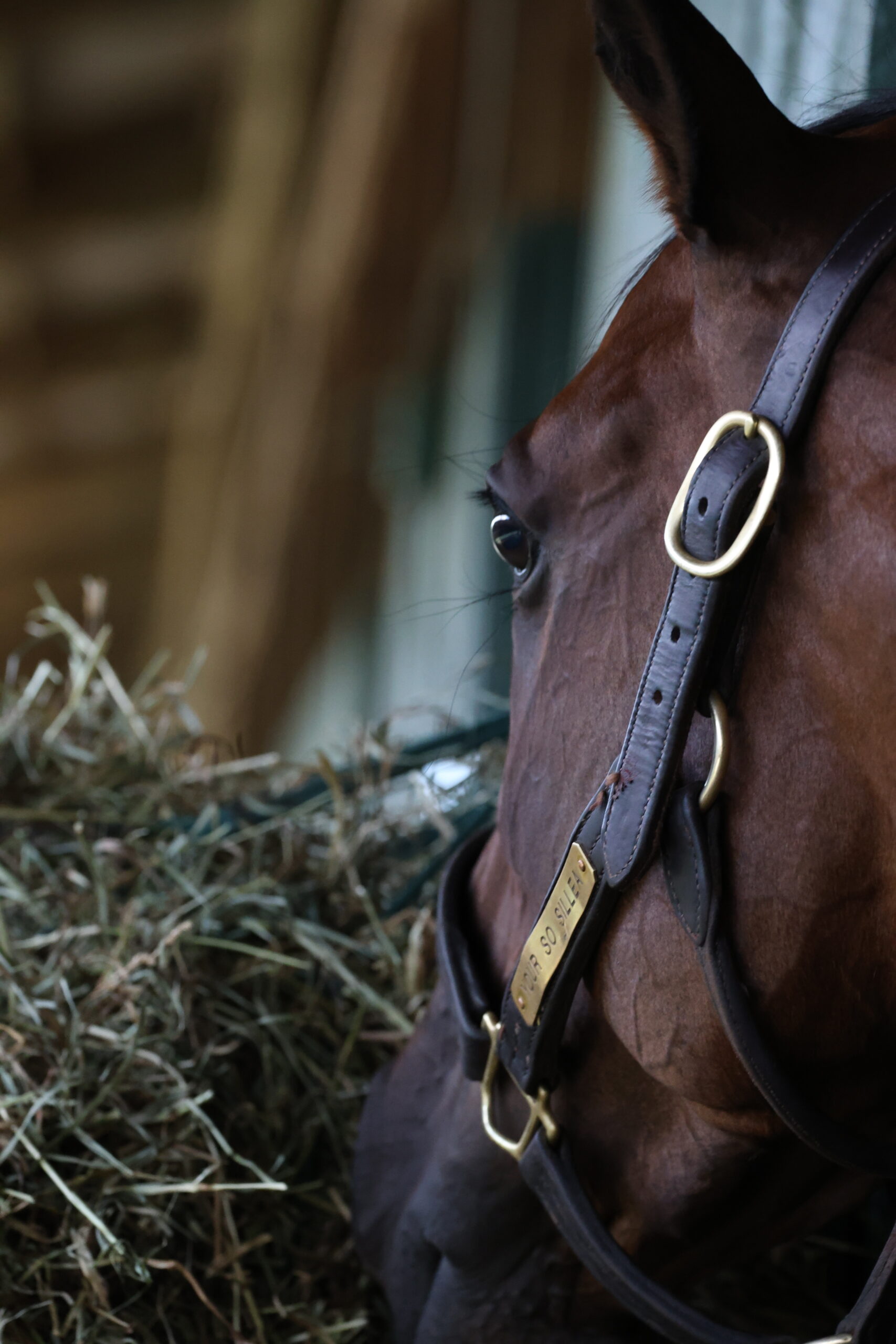
Thoroughbreds stalled at the racetrack consuming hay and without access to fresh pasture might need additional vitamin E. Photo Credit: Holland Smith / Owney Creative
Take-Home Message
Whether a horse needs supplemental vitamin E depends on access to pasture and how much vitamin E the rest of the diet supplies. “The best course of action is to ensure that all horses receive adequate vitamin E in their diet,” Lawrence says. Ask your veterinarian to check your horse’s blood alpha-tocopherol levels and work with an equine nutritionist to tailor the diet to the horse’s body weight, life stage health and workload.